The Child Who Has No ID Still Has an Identity
Australia requires platforms to keep under-16s off. How do you prove a child is 14 without building a database of children?
As the inventor of the first App Store, I have spent a lifetime working on digital rights and identity. As a parent, there is one principle I will not compromise: a child should never have to surrender their privacy simply to participate online.
Yet we have created a strange problem.
From educational services to games and online communities, children increasingly need to prove who they are and how old they are. In Australia, that problem has become especially important. The country now requires covered social media platforms to take reasonable steps to prevent children under 16 from holding accounts.
But how do you prove that a child is 13, 14 or 15?
And what happens when the child does not have a conventional government-issued identity document?
The answer is not to force every child into an identity system designed for adults. The answer is to recognize the identity they already have.
Your child already has a digital life
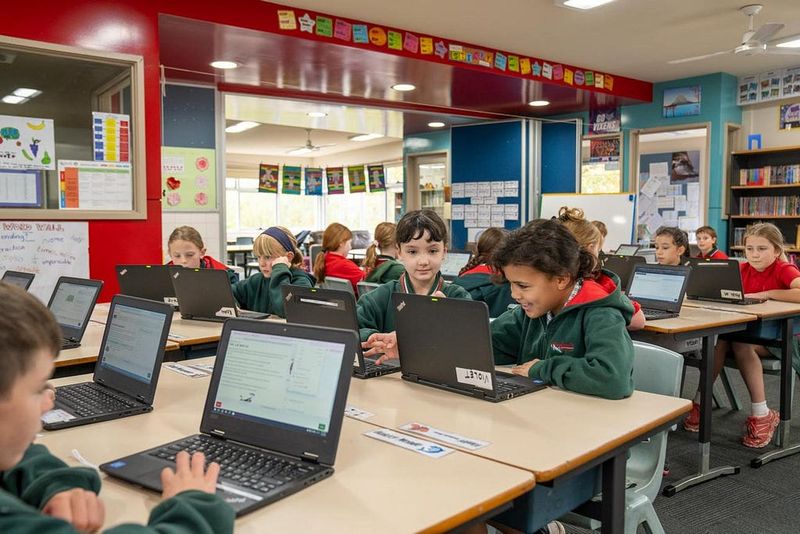
My children have had school accounts, educational services, gaming accounts, healthcare relationships and other digital records. Their school account is particularly interesting. It is not simply an email address.
This is an account created and maintained by the school. Parents can see it. Teachers can see it. The school controls it. It identifies the student within the school community and establishes facts that matter: this is the student, this is their school, this is their year level.
At the end of the school year, the account can be retired and a new relationship established. That is a very different kind of identity from an email address. It is a curated identity.
What is an anchor?
An anchor is an existing, trusted relationship that can establish something about a person without requiring the person to disclose everything about themselves.
A school account can be an anchor of a student’s identity. It can establish that the student belongs to that school. It can establish their year level. It can establish that the account is maintained by an institution with an independent reason to know who that student is.
Most importantly, the student does not create the evidence themselves.
A fraudster can create an email address. A fraudster can create a website. A fraudster can create a social-media profile. But a fraudster cannot simply create the school’s continuously maintained record of a student.
That distinction changes everything.
Proving age without exposing identity
Suppose a student needs to demonstrate that they are between 13 and 16. The useful question is not:
“Show me your identity document.”
The useful question is:
“Is there a trusted relationship that can establish the fact I need to know?”
Through TruAnon, an authorized service can establish visibility between trusted properties. The school does not have to hand over the child’s entire record. It can simply provide the necessary proof.
The service requesting access does not necessarily need to know the child’s address, medical history, photograph or government identifier. It needs to know the fact required for the transaction.
That might be:
This is a real student.
This student attends this school.
This student is in Year 8.
This student is within the permitted age range.
The proof remains anchored to the institution that maintains the underlying relationship. And because that relationship continues to exist, the proof can continue to be valid.
Identity assurance must be continuous
This is where conventional identity verification falls short. A document is checked once. A selfie is checked once. A date of birth is typed into a form.
Then everyone hopes the assertion remains true.
Anchored identity works differently.
The underlying relationship can be continuously maintained. If the school account is active, the relationship exists. If the student leaves the school, the relationship can end. If permission is granted, it can be revoked. If access is no longer appropriate, the connection can be turned off. The result is not simply identity verification. It is continuous identity proofing.
Children already have trusted digital relationships
This is the important thing we have missed. Children do have digital identities. They have them in schools. They have them in healthcare. They have them in education. They have them in games.
They have them in the services their parents use to manage their lives.
Australia’s healthcare system is another example of a large-scale trusted relationship involving children. The opportunity is to allow trusted properties to establish limited visibility between one another without turning every interaction into a disclosure of the child’s entire identity.
That is the purpose of anchoring.
From proving identity to proving relationships
Imagine a student accessing an educational resource. The resource does not need a copy of the child’s identity documents. It needs to know that the student is entitled to access it. Imagine connecting students across Australia. The system does not need to publish their identities to the world.
It needs to establish that they are genuine students and, where appropriate, that they fall within the relevant age group.
Imagine connecting students internationally. Again, the important thing is not exposing the child’s identity. It is establishing the trusted relationship behind it. That is what an anchored identity makes possible.
Dawn of the Trusted Internet
Australia’s age-assurance requirements have forced an important question into the open: how do we protect children online without making privacy the price of participation?
The answer cannot be another giant database of children’s identities. It cannot be asking children to repeatedly upload identity documents. And it cannot depend entirely upon algorithms guessing a child’s age from their face, voice or behaviour.
The better answer is to use the trusted relationships that already exist.
Schools already know their students. Parents already have visibility. Teachers already have oversight. Healthcare systems already maintain relationships with patients.
These are anchors.
TruAnon binds to those anchors while allowing the owner of the relationship to control what becomes visible, to whom, and for how long.
That means identity can be assigned, anchored, verified and revoked without becoming exposed. Children should not have to surrender their privacy to enter the digital world. They should be able to enter it with something better: an identity that is trusted because it already exists.
That is the dawn of the trusted Internet.